Tag: foraging

  • Purple Dead Nettle

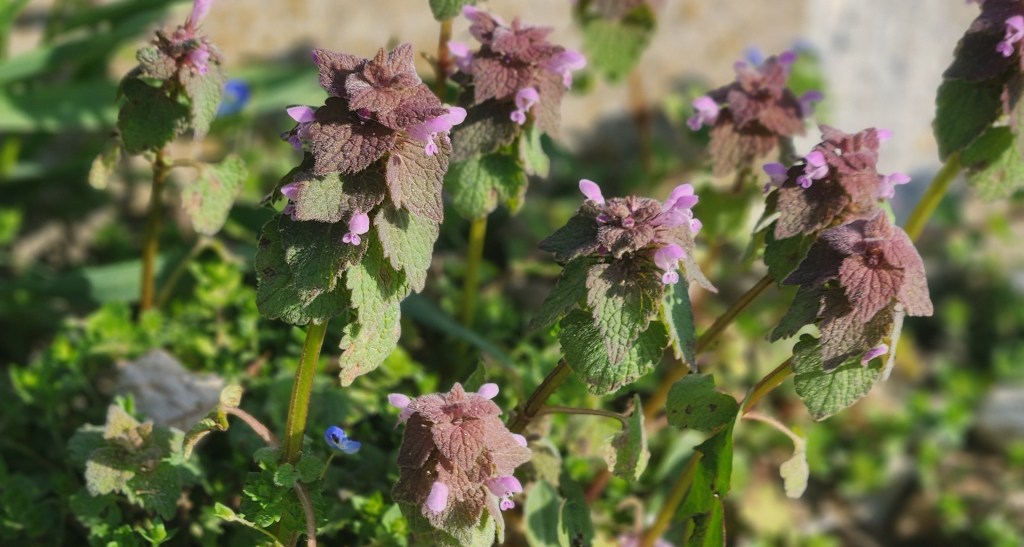
    Lamium Purpureum is also known as Purple Archangel, Purple Dead Nettle, and Red Dead Nettle.

    The “nettle” part of its name makes some people nervous, but this plant isn’t a true nettle at all. It gets its name from the distinctive purple leaves at its crown and the fine hairs that grow on its leaves and stem. While the hairs look similar to the hairs on stinging nettles, they do not have the same properties that cause them to get stuck in your skin and cause that stinging sensation.
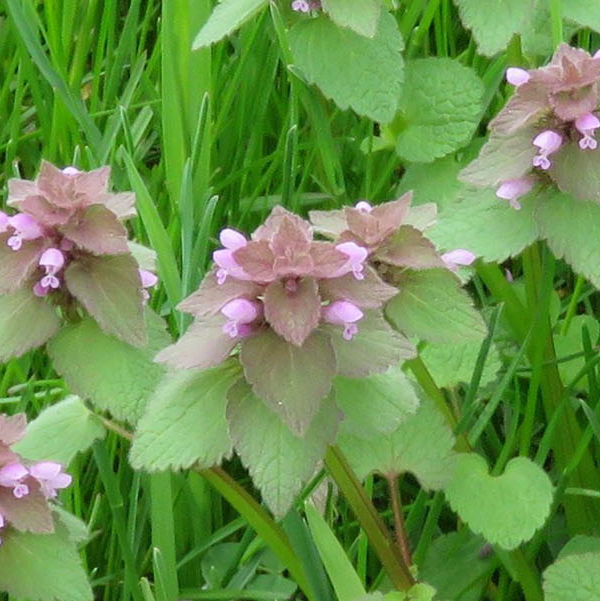
    Photo from MSU Extension

    Purple Dead Nettles are actually an herb belonging to the mint family. They do not taste like any kind of mint; flavor-wise, they are more similar to spinach, but they are still delicious. The whole plant can be eaten safely, but the leaves are usually the tastier part.

    The thing to note about the mint family is that plants in this family reproduce through their roots. If the plant is mowed down or its leaves are harvested, it can still come back as long as at least part of the root system remains in the ground. This is one of the things that makes plants in the mint family so hard to get rid of. Purple Dead Nettle as a fairly shallow root system, so can be pulled up without too much effort.

    Purple Dead Nettle is native to Europe and Asia. While it is not native to North America, it is considered naturalized after being introduced in the 1920s. There are some places where it is considered mildly invasive, so it is not recommended that you try and plant any more of it. It is usually not harmful and can actually be beneficial to some areas.

    Purple Dead Nettles are winter annuals that blossom early in the spring, providing honeybees with sources of nectar and pollen before most other spring flowers have bloomed.

    This plant is known not only for its edibility but also for its antimicrobial properties. It is often used in topical treatments to soothe irritated, itchy, or sore skin, as well as being used as a disinfectant for minor scrapes and cuts.

    This plant grows all over Michigan, and I love seeing the purple and green popping up everywhere in the spring. This is one of my favourite spring herbs, and I am excited to try it in some new recipes this year.
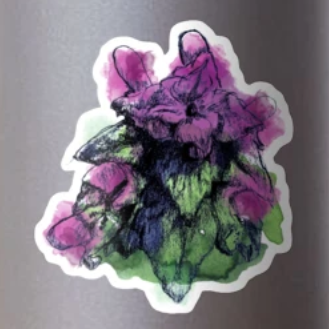
    https://www.redbubble.com/i/sticker/Purple-Archangel-by-obsessedpenguin/110340215.EJUG5
  • Wild Violets

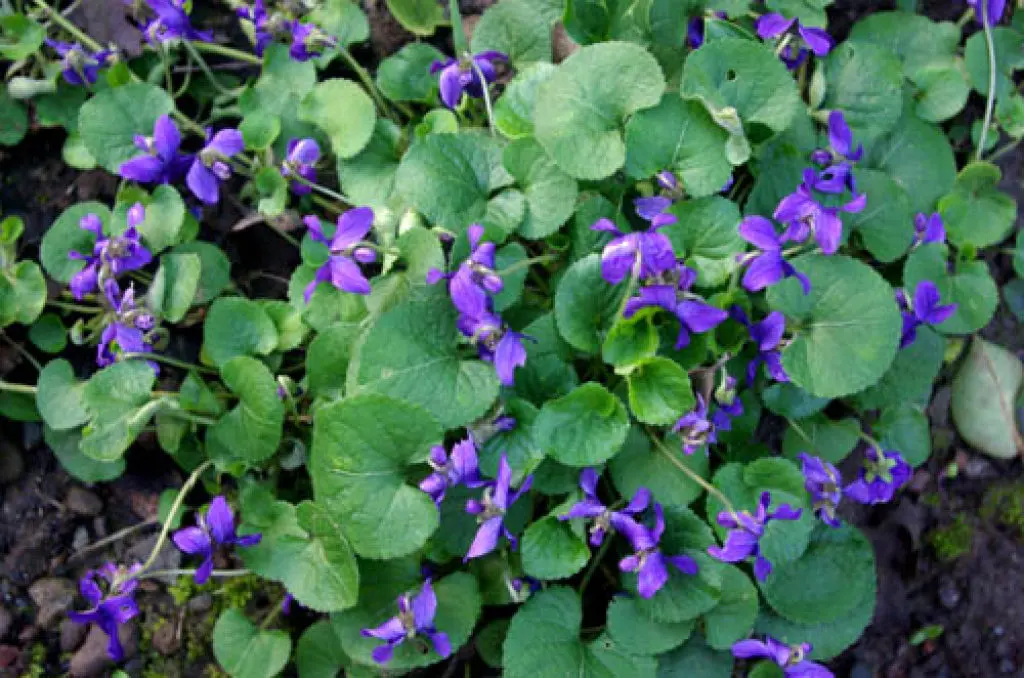
    Wild violets are these tiny purple flowers, and in our yard they are one of the first flowers to pop up in the spring.

    Wild violets can be white, but the majority of the ones that grow in our town are this vibrant bluish-purple color. They are tiny pretty little flowers, and they’re delicious too!

    Both the flowers and leaves are edible. It is important to properly identify any plant before eating it, the leaves of the celandine plant look very similar to wild violet leaves but are toxic to humans. Additionally, don’t eat plants from roadsides or anywhere that you are not sure is clear of pesticides and herbicides, and always wash anything you are going to eat by rinsing it in clean water.

    I like to add the leaves to salads or to grilled cheese sandwiches; they are a leafy green after all.

    The blossoms I use to make a wild violet simple syrup.

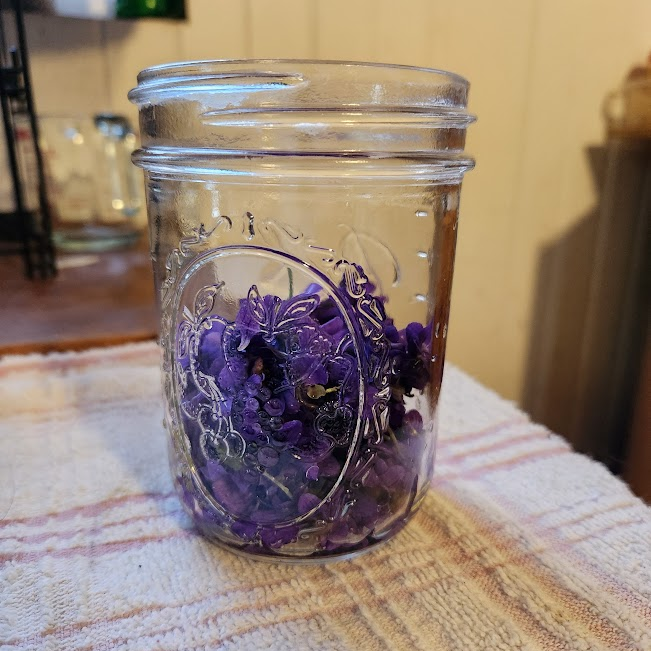
    The first step involves gathering your flowers and removing them from their stems. Here I have about 1 cup of flowers.

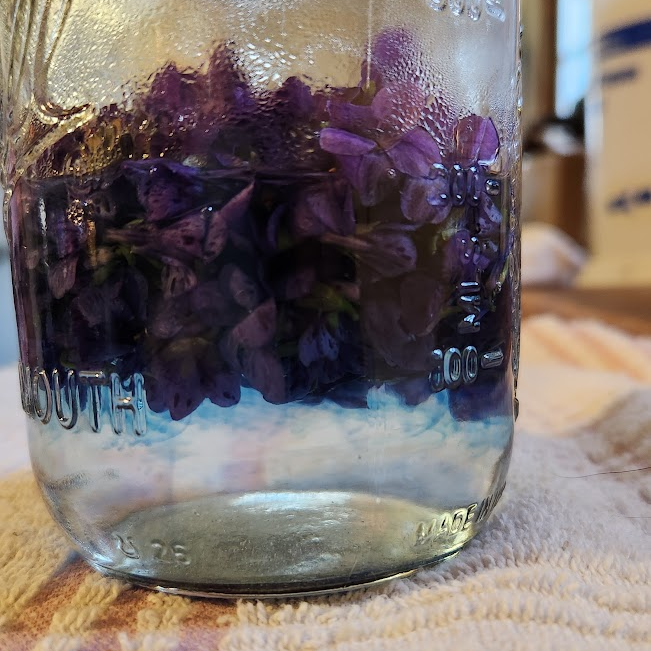
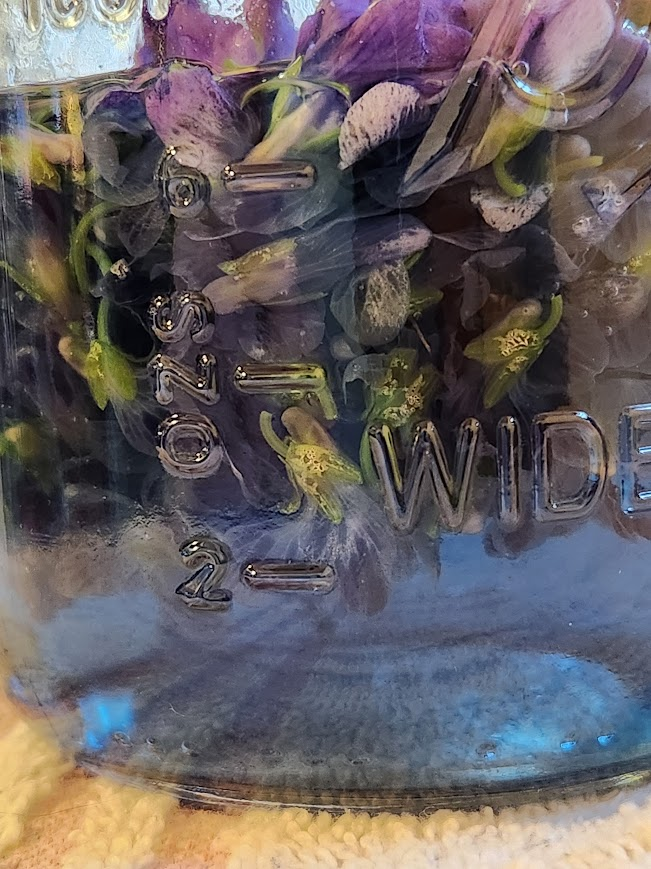
    Then, you want to add boiling water to your flowers; you want a ratio of about 1:1, so I used 1 cup of boiling water.

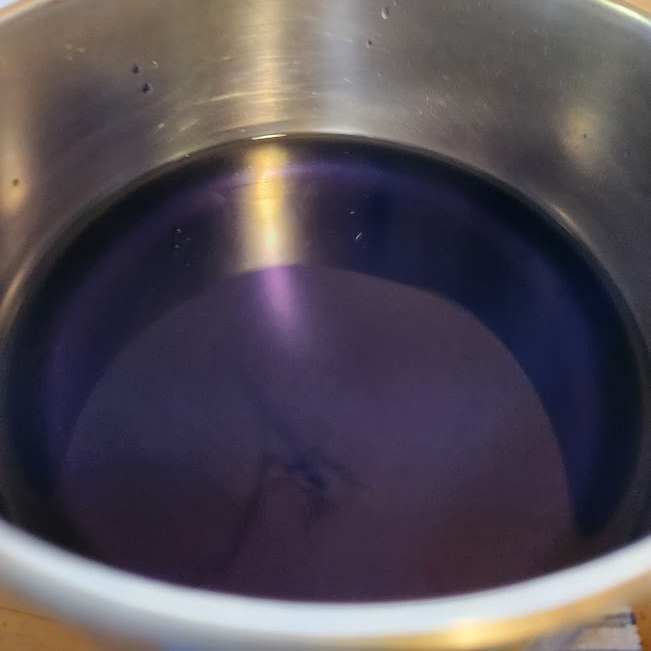
    As you can see from the photo, the flowers immediately start to release their colour, which is very cool to watch.

    After just 10 minutes, you could see how much colour had leached out of the petals.

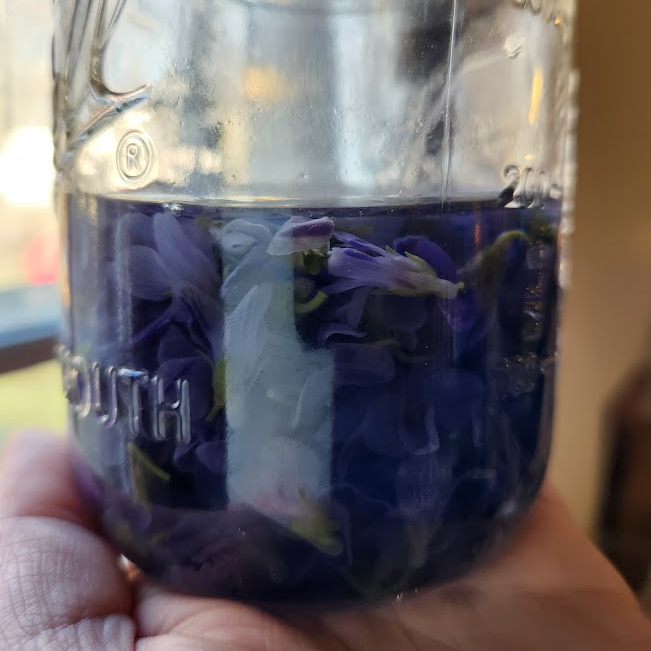
    Leave your concoction for at least 24 hours to allow the flavours to be extracted. I left these flowers sitting for about 48 hours.

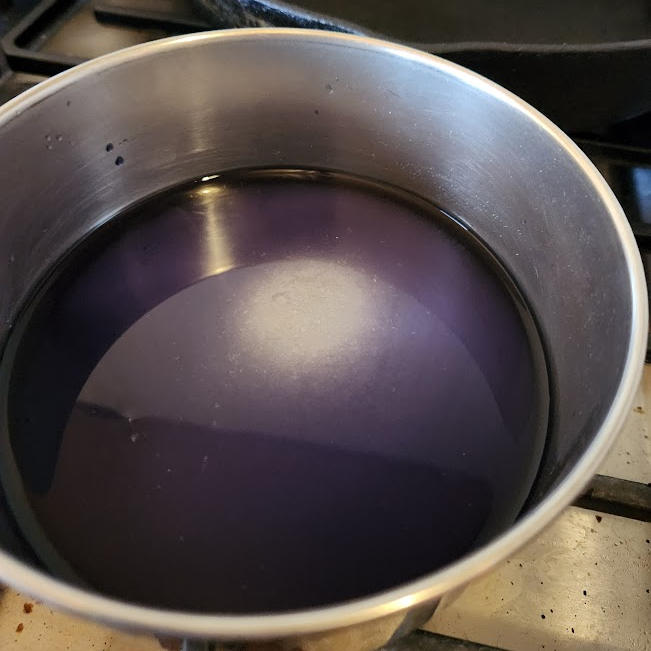
    You can see now what a dark indigo colour the water is. At this point it just tasted kind of perfumy but not very strong.

    Strain your liquid into a pot or pan; I used a clean rag to squeeze the flowers and then disposed of them in my compost heap.

    Now you can make your simple syrup, which is basically just equal parts sugar and water. I added 1 cup of granulated sugar to the violet water and brought it to a boil, stirring constantly until the sugar was completely dissolved.

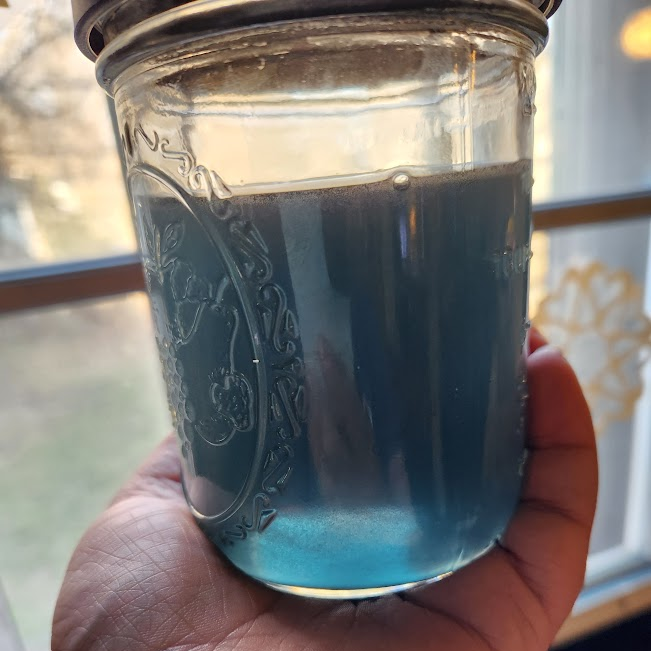
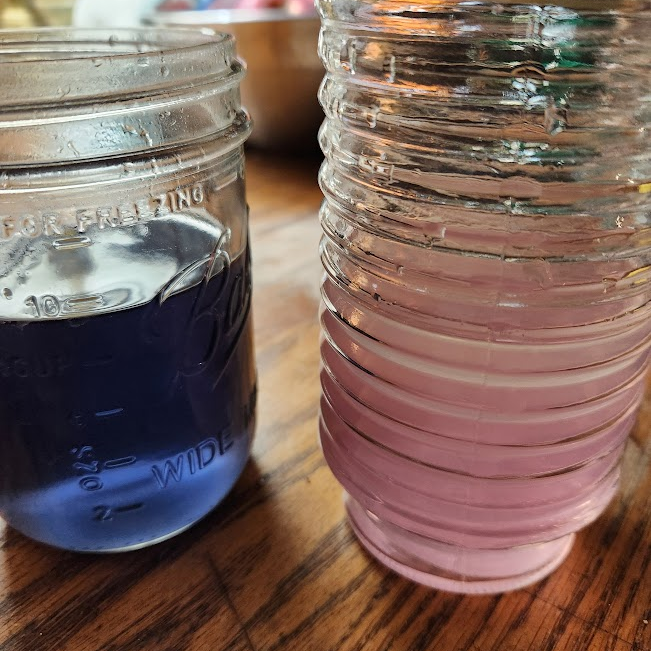
    When it was done, I put it back into the (freshly washed) jar and was delighted to find that it had completely changed colour. It had gone from a deep indigo to a lighter, brighter teal.

    I put it in the fridge to cool and didn’t go back to it for a couple of days.

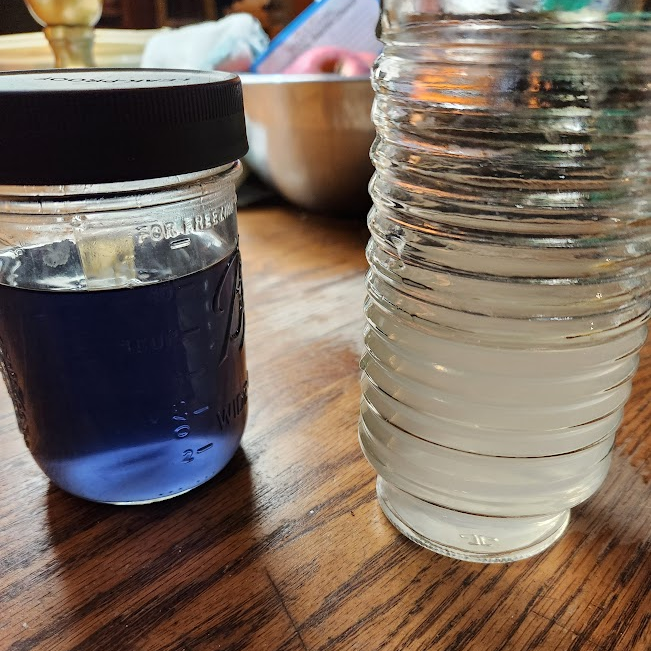
    When I returned, it had changed again and was more of a navy blue.

    I mixed together some water and lemon juice, then added my simple syrup.

    The acidity of the lemon juice turns your wild violet simple syrup pink! I mixed together some more and made an actual batch of lemonade, which was very nice; it had a light and very nondescript floral note to it, but otherwise just tasted like lemons.

    I am looking forward to using this for more stuff; last year I used it to make wild violet lemon popsicles, and I used it in tea a lot.

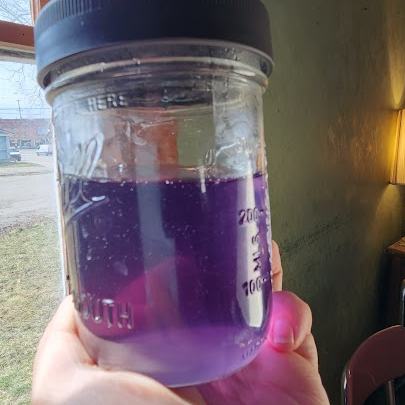
    After about a week in the fridge, the syrup has turned to a nice light purple; you could even call it violet…

    This is a fun experiment to do with your kids if you are trying to teach them about acids vs. bases and pH levels. The violets contain anthocyanin pigments, which are water soluble and change colour depending on the pH of their environment. If you add acid, like our lemon juice above, you will get a pink colour, but if you add a base like baking soda, it will turn a bluish-green.

    The reason our syrup changed to teal before is that the boiling process had caused some of the carbonic acid in the water to decompose into carbon dioxide gas and escape. This meant that the water was now more alkaline than it had been before.

    As the syrup sat and cooled, it absorbed carbon dioxide from the air and converted it into carbonic acid, lowering the pH from neutral back down to slightly acidic.

    Recommended reading: