Please enjoy this photo of Hamlet lying in bed with a squeaky tennis ball while I am trying to write a heart wrenching scene between my female protagonist and her father.
He is normally a great writing buddy, sitting quietly next to me with a chew or taking a nap. But, today, all he wants to do is lay next to me chewing on his ball.
It’s not all Hamlet’s fault though. Between the squeaks all I have is this song playing in my head nearly nonstop.
I should maybe start by saying that I am not a huge fan of Star Wars, or maybe that’s the wrong thing to start with? I like the original trilogy and Rogue One.
I first saw Star Wars: A New Hope and The Empire Strikes Back when I was seven. Han Solo was my favourite character and I was quite upset when he was frozen in carbonite.
For a variety of reasons, I did not watch Return of the Jedi until I was 15. So for me, Han Solo was trapped in carbonite for eight years. It was nice to see him finally released, even a little anticlimactic. But the original trilogy ended feeling like a nice complete story, so I never really wanted to watch more.
Plus, science fiction/war movies/westerns aren’t really my go to genre, but I know how important these films are to some people, so, Happy Star Wars Day.
The title says it all. I live in a household of three and two halves people and I went and bought 35 pounds of potatoes. In my defense, the potatoes cost me a total of $7. It was a really good sale…
We’ve been eating potatoes for almost a week and I am thoroughly enjoying them. We still have so many left, and the sale is still going so I am faced with the temptation to go and get more.
There were only two types on sale, golds and reds, but you can do a lot with a potato.
So far we have made oven chips, potato stacks, mashed potatoes au gratin, poutine, and cheesy potato soup. And there are still so many other potato dishes to try!
When I was little, my Dad always had Jolly Ranchers in his workshop. He kept them in an old Maxwell House coffee tin that was missing its lid.
While Jolly Ranchers are not my favourite candy, they do hold a certain nostalgia, and I love to occasionally indulge.
Lately it seems there has been a surge of making gummies that are flavoured like candies that are not normally gummies. I like gummies, so no complaints about that trend, and I was excited to try the Jolly Rancher ones specifically. While I am aware that these have been around for several years now, I haven’t had much opportunity to try them.
The verdict: I like them!
I like the texture; they have a good amount of chew without being tough. The flavours are pretty accurate; they taste like Jolly Ranchers. Watermelon Jolly Ranchers are my favourite, and that stands true with these gummies. I didn’t like blue raspberry flavoured things in general as a child, something about the blue colour was off-putting for me, but it has grown on me over the last couple of years. Actually, I would say that the green apple is my least favourite now; it’s good but it doesn’t make me want to go back for more.
Of course, my flavour preferences are completely based on my personal taste. I would say they are all equally accurate relative to their harder counterparts.
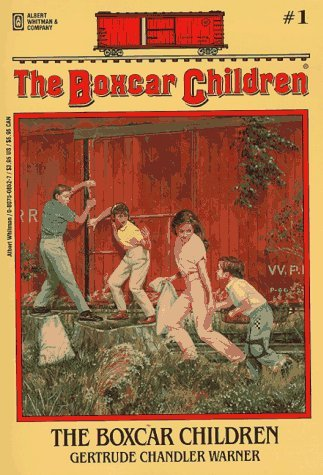
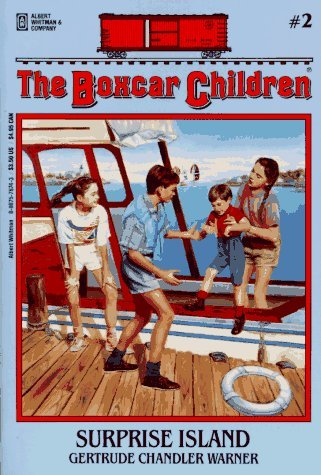
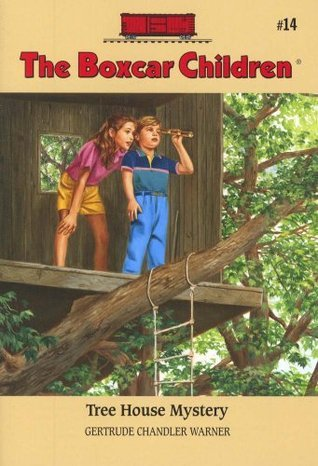
When I was about eight or nine years old, I set out on a mission to read every single Boxcar Children book.
By that point I had already read all 19 of the original books written by Gertrude Chandler Warner, and I had also read a good number of the following novels written by other authors.
The first novel, “The Boxcar Children”, was first published in 1924. Gertrude wrote it while working as a teacher and reworked it with her students to make sure it was engaging and easy for kids to read. One of her goals specifically was to make sure that the words were clear and easy to understand for her students who were learning English as a second language.
Now, 101 years later, the book series has grown to include over 200 books written by various authors, and more are being published every year.
So now I have a problem. Twenty years ago, I successfully read all 126 Boxcar Children books that had been published. While I have read a few more of the books that have been published since, I am definitely way behind. I made no effort to keep up with them as they were published.
So now I have to decide: do I do it again? Do I commit to reading 80ish books so that I can once again say that I have read every single Boxcar Children book?
The answer is yes, so stay tuned to see how it goes!
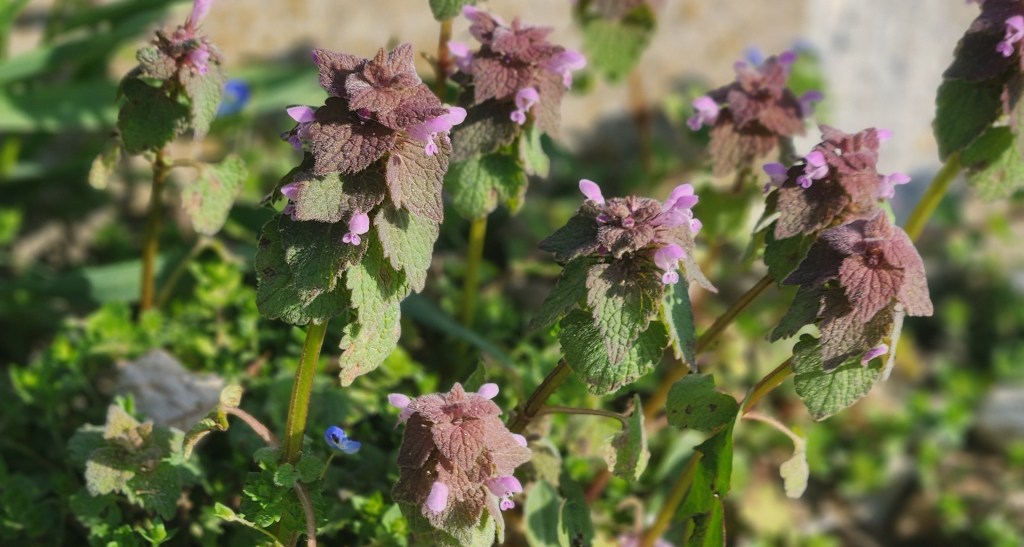
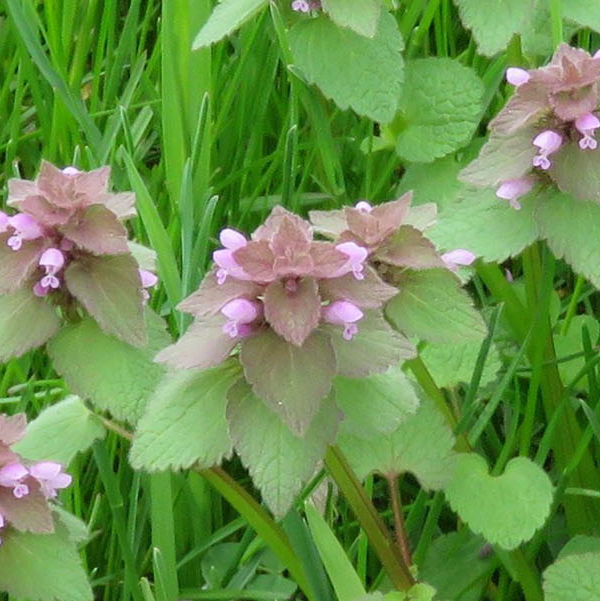
Lamium Purpureum is also known as Purple Archangel, Purple Dead Nettle, and Red Dead Nettle.
The “nettle” part of its name makes some people nervous, but this plant isn’t a true nettle at all. It gets its name from the distinctive purple leaves at its crown and the fine hairs that grow on its leaves and stem. While the hairs look similar to the hairs on stinging nettles, they do not have the same properties that cause them to get stuck in your skin and cause that stinging sensation.
Photo from MSU Extension
Purple Dead Nettles are actually an herb belonging to the mint family. They do not taste like any kind of mint; flavor-wise, they are more similar to spinach, but they are still delicious. The whole plant can be eaten safely, but the leaves are usually the tastier part.
The thing to note about the mint family is that plants in this family reproduce through their roots. If the plant is mowed down or its leaves are harvested, it can still come back as long as at least part of the root system remains in the ground. This is one of the things that makes plants in the mint family so hard to get rid of. Purple Dead Nettle as a fairly shallow root system, so can be pulled up without too much effort.
Purple Dead Nettle is native to Europe and Asia. While it is not native to North America, it is considered naturalized after being introduced in the 1920s. There are some places where it is considered mildly invasive, so it is not recommended that you try and plant any more of it. It is usually not harmful and can actually be beneficial to some areas.
Purple Dead Nettles are winter annuals that blossom early in the spring, providing honeybees with sources of nectar and pollen before most other spring flowers have bloomed.
This plant is known not only for its edibility but also for its antimicrobial properties. It is often used in topical treatments to soothe irritated, itchy, or sore skin, as well as being used as a disinfectant for minor scrapes and cuts.
This plant grows all over Michigan, and I love seeing the purple and green popping up everywhere in the spring. This is one of my favourite spring herbs, and I am excited to try it in some new recipes this year.
The journey through WWII continued this week with The Great Escape (1963). I watched this movie quite a lot as a child; it was one of Dad’s favourites. I hadn’t seen it in several years, but I remembered it as being a good movie with a moving story, even more so because it is based on actual events.
The Great Escape from Stalag Luft III, a German prisoner of war (POW) camp, was first conceived in March 1943 and took place a year later on the night of March 24, 1944. Three tunnels were dug simultaneously so that if any one tunnel was discovered, they would already be well on their way with another.
The most radical aspect of the plan was not the use of multiple tunnels; rather, it was the number of men that they intended to have escape through them. For the most part, escape attempts involved individuals or small groups, maybe as many as 20, but for this attempt, the plan was to smuggle over 200 men out of the POW camp.
Through a series of unforeseen events, only 76 men successfully made it through the tunnel and out of the camp. Of these 76 prisoners, 73 were recaptured, and only three made it to safety. 50 of the recaptured prisoners were executed on Hitler’s orders. Most of the remaining prisoners were sent back to Stalag Luft III, while a couple of them were sent to a concentration camp. (You can read a firsthand account from one of these men here: https://www.pegasusarchive.org/pow/jimmy_james.htm)
In 1950, a book with the title “The Great Escape”, written by Paul Brickhill, was published. Paul Brickhill was a POW in Stalag Luft III during the escape and participated in the plan. He was not a part of the actual attempt due to claustrophobia, which would make crawling through a 300+ foot tunnel 30 feet underground even less fun.
The 1963 film is a fictionalized version of events, with the fictitious characters each being composites of several men. Events are dramatized for film, but many of the included details about the escape are historically accurate.
Despite its tragic ending, the movie is a great one to watch. It tells an important story about hope and resilience.
Located just outside of Spring Arbor, Michigan, Lime Lake is a beautiful place to spend a spring morning. The Falling Waters Trail runs through the 321-acre park. The wide, flat trail is paved, making it popular with walkers and bikers.
There are a couple of interpretive signs along the trail (though, as a recreation professional myself, I think they could be finessed a bit more.) that provide a little information on the history of the land.
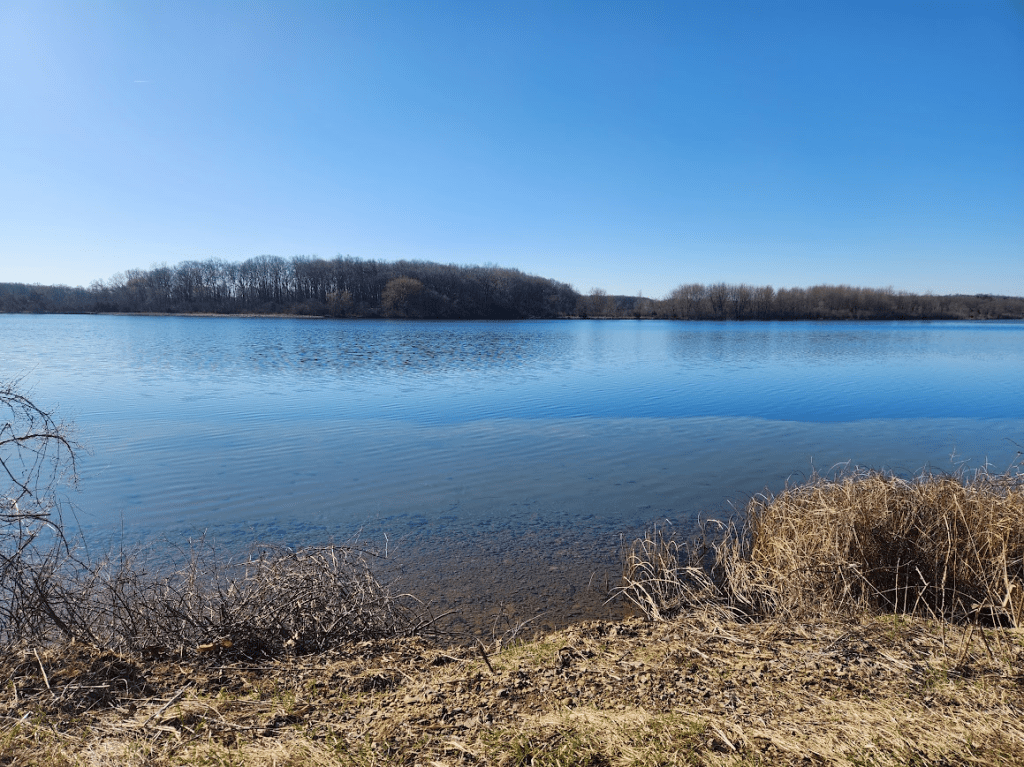
The land was used for mining marl (a combination of limestone, sand, and clay; usually used in the production of cement) until 1929. While most of the land has been reclaimed by nature, the evidence of past mining can still be seen, such as in the photo above.
In the photo, we can see the edge of a limestone shelf as it suddenly drops off.
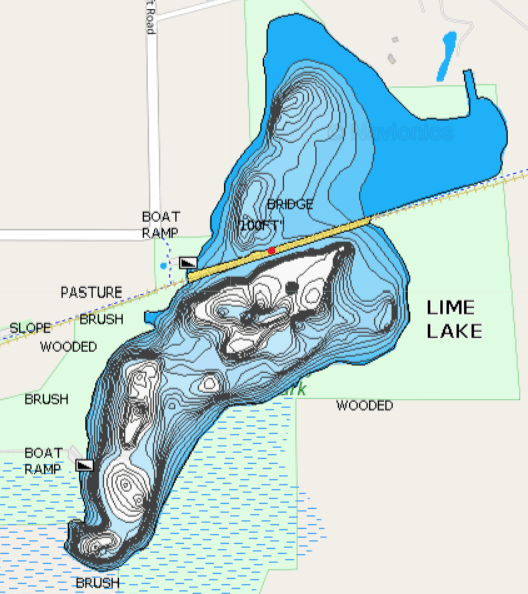
A depth map of Lime Lake. The little red dot in the center of the trail shows approximately where I was standing when I took my photo.
The park is beautiful and well-kept, designed with an emphasis on enjoying the beauty of nature while making said nature accessible to a wide variety of people.
While I was slightly critical of the interpretive signage earlier, I do appreciate that someone took the time and effort to put it there. A pit toilet by the dirt parking lot that appears to be open year-round, or at the very least gets opened earlier than most. (A lot of park toilets don’t get opened until the beginning of May; this one was open when I first drove by the park in mid-March.)
Another thing I noticed and appreciated was that they had a bike pump installed near the parking lot, next to the trail. I think that is a nice touch, it does a lot to create a welcoming atmosphere.
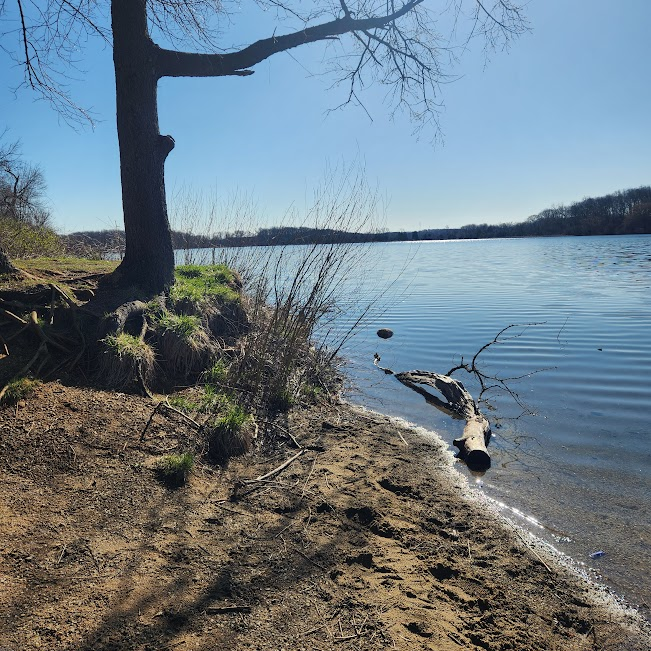
I could go on much longer talking about the little details I noticed; maybe I will at some point, but for now I will leave you with one last quick photo.
I didn’t know until after I started it that this book was technically the third in a series of eight books. Fortunately, it is well written and can stand on its own, an important trait for this kind of mystery novel.
I think that having read the first two books would have made me care a little more about the storyline surrounding the detectives, Alvarez and Pescoli, but this book gave me enough information about their background that I didn’t feel lost.
I found this book inside a Little Free Library (LFL) by a trailhead in Concord. I later went back and deposited a book from a previous LFL that I hadn’t bothered to finish. It wasn’t bad, just not to my taste. I try never to return a book to the same LFL, cycling them around whenever I travel. Now that I have finished this book, it will go to a new LFL to hopefully be found and enjoyed by someone new.
This particular story is a murder mystery. It is not told from the perspective of a single character, instead moving around between the viewpoints of about half a dozen central characters: Detectives Alvarez and Pescoli, Kacey (our leading lady and potential future victim), Trace (love interest), the murderer, and the occasional victim.
The story centers around Dr. Acacia (Kacey) Lambert, a general practitioner in a small town in northern Montana. As the story unfolds, she realizes that someone is targeting women who look remarkably similar to her and were born in the same town as her. Their deaths have mostly been ruled as accidents, and no evidence has been found to link them together, but there are too many coincidences to be ignored. Kacey embarks on her own private investigation with the help of Trace, a handsome single father who owns a ranch nearby and whose long-missing wife bore a strong resemblance to Kacey. Meanwhile, detectives Alvarez and Pescoli suspect that some of the recent accidents in the area are not accidents at all but are, in fact, the work of a serial killer.
I thoroughly enjoyed reading this book, and if you are a fan of serious thriller/suspense mysteries, then head to your local library and check out some Lisa Jackson books!






 Snug Slug Activities