Wild violets are these tiny purple flowers, and in our yard they are one of the first flowers to pop up in the spring.
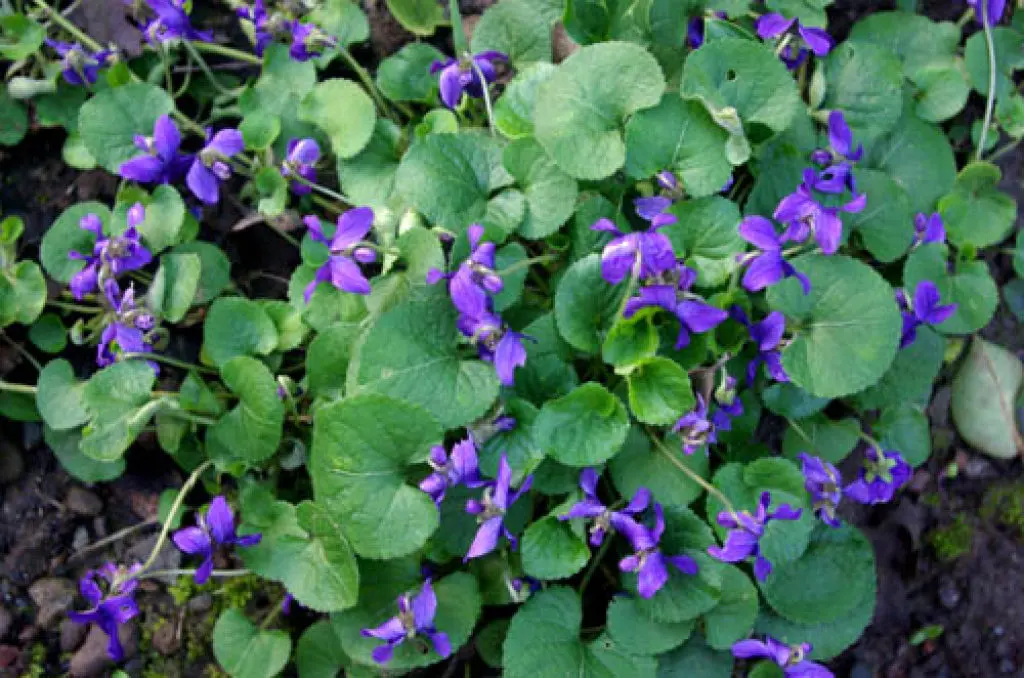
Wild violets can be white, but the majority of the ones that grow in our town are this vibrant bluish-purple color. They are tiny pretty little flowers, and they’re delicious too!
Both the flowers and leaves are edible. It is important to properly identify any plant before eating it, the leaves of the celandine plant look very similar to wild violet leaves but are toxic to humans. Additionally, don’t eat plants from roadsides or anywhere that you are not sure is clear of pesticides and herbicides, and always wash anything you are going to eat by rinsing it in clean water.
I like to add the leaves to salads or to grilled cheese sandwiches; they are a leafy green after all.
The blossoms I use to make a wild violet simple syrup.
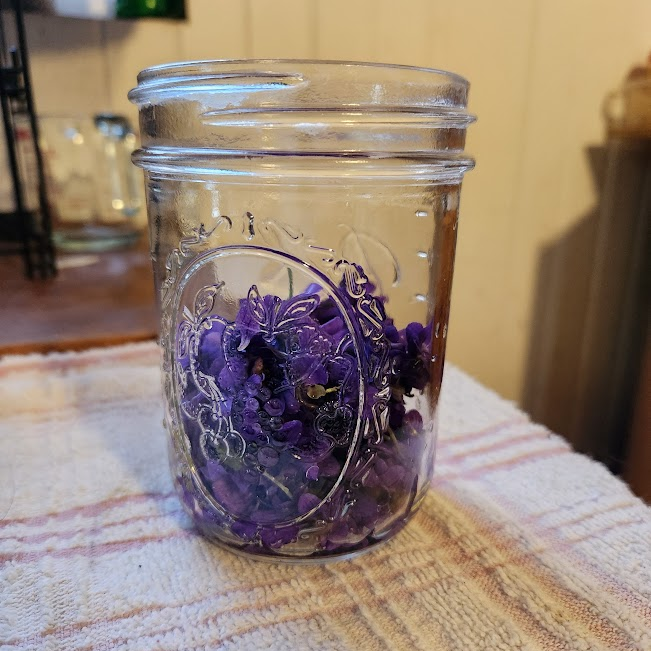
The first step involves gathering your flowers and removing them from their stems. Here I have about 1 cup of flowers.
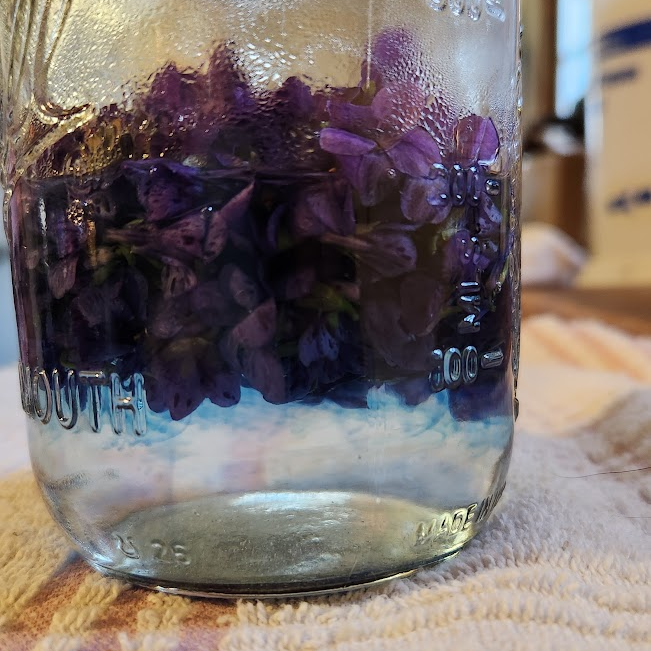
Then, you want to add boiling water to your flowers; you want a ratio of about 1:1, so I used 1 cup of boiling water.
As you can see from the photo, the flowers immediately start to release their colour, which is very cool to watch.
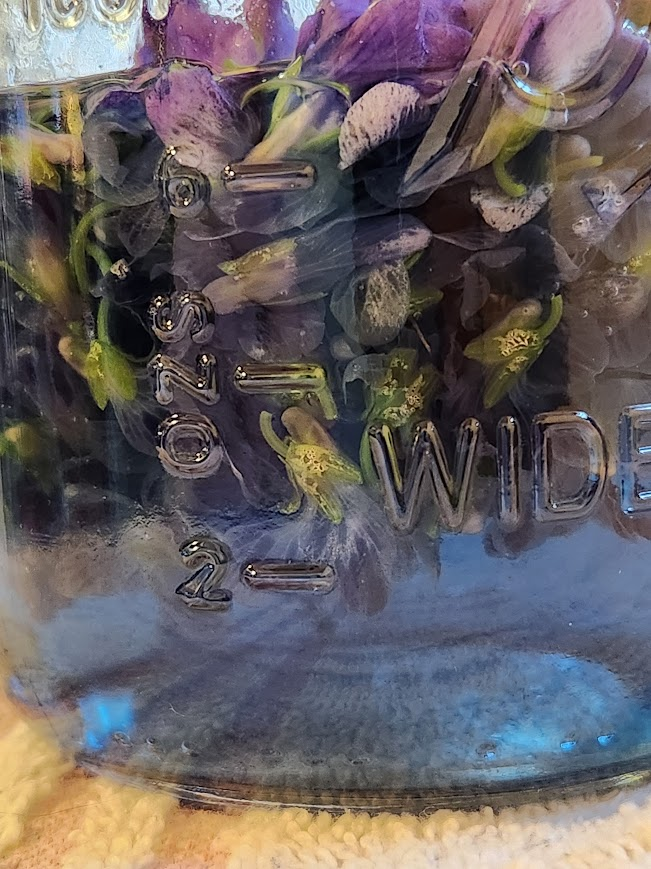
After just 10 minutes, you could see how much colour had leached out of the petals.
Leave your concoction for at least 24 hours to allow the flavours to be extracted. I left these flowers sitting for about 48 hours.
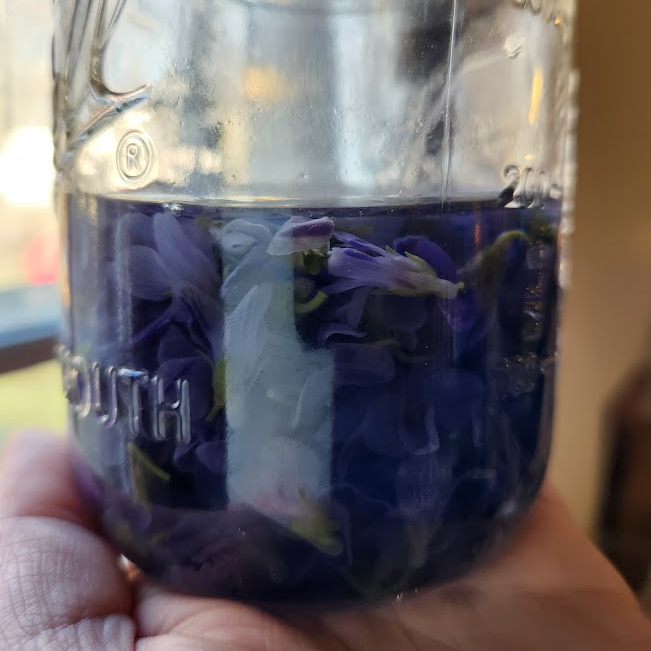
You can see now what a dark indigo colour the water is. At this point it just tasted kind of perfumy but not very strong.
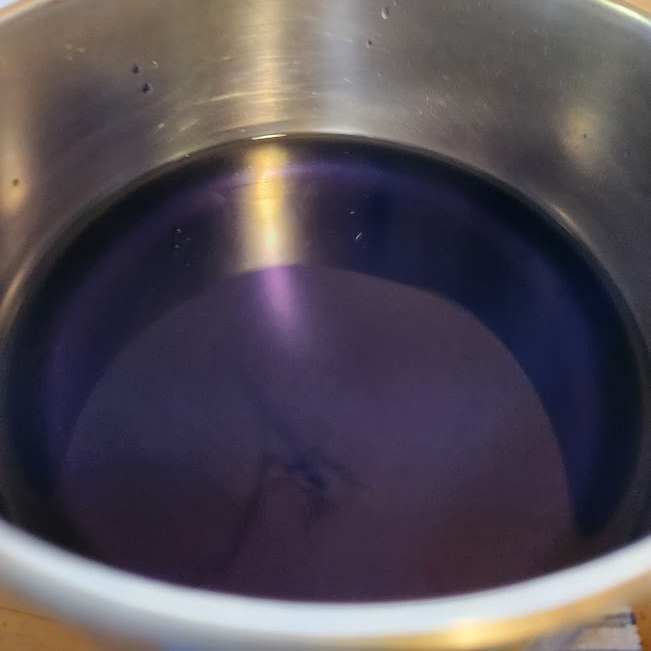
Strain your liquid into a pot or pan; I used a clean rag to squeeze the flowers and then disposed of them in my compost heap.
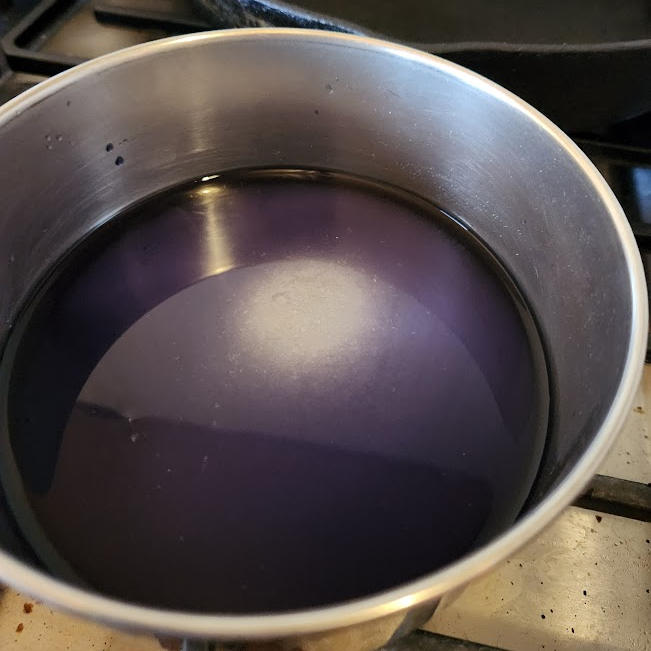
Now you can make your simple syrup, which is basically just equal parts sugar and water. I added 1 cup of granulated sugar to the violet water and brought it to a boil, stirring constantly until the sugar was completely dissolved.
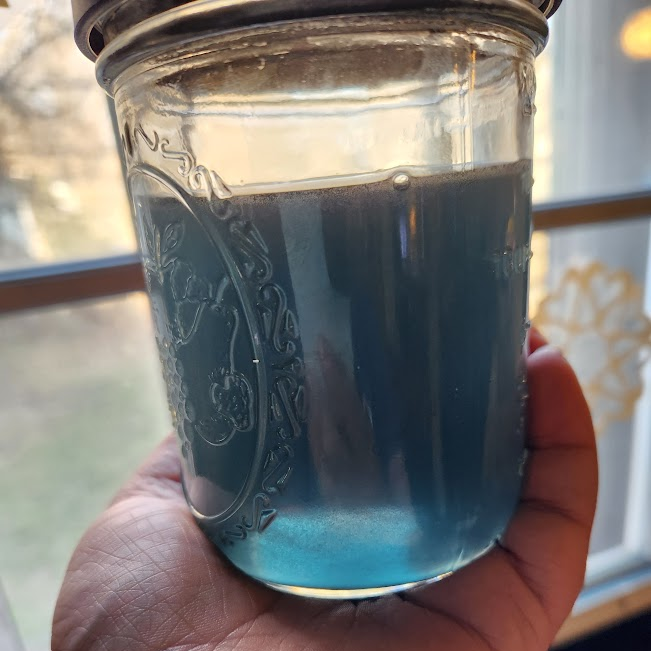
When it was done, I put it back into the (freshly washed) jar and was delighted to find that it had completely changed colour. It had gone from a deep indigo to a lighter, brighter teal.
I put it in the fridge to cool and didn’t go back to it for a couple of days.
When I returned, it had changed again and was more of a navy blue.
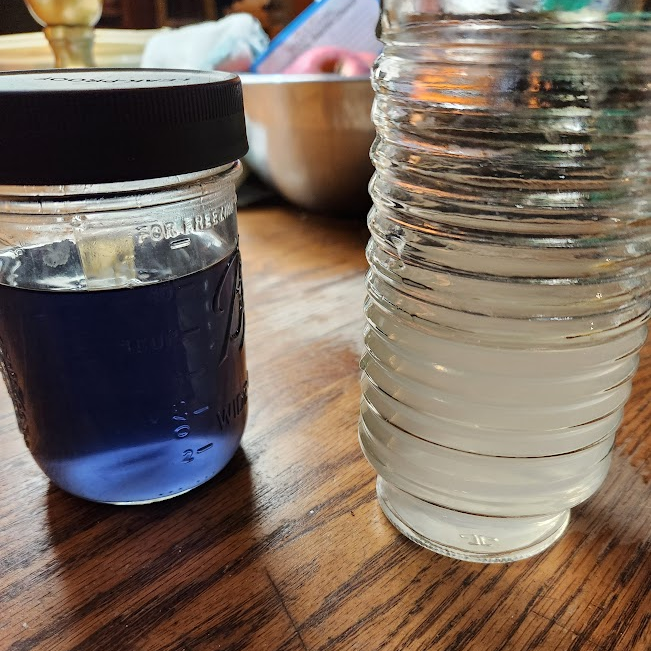
I mixed together some water and lemon juice, then added my simple syrup.
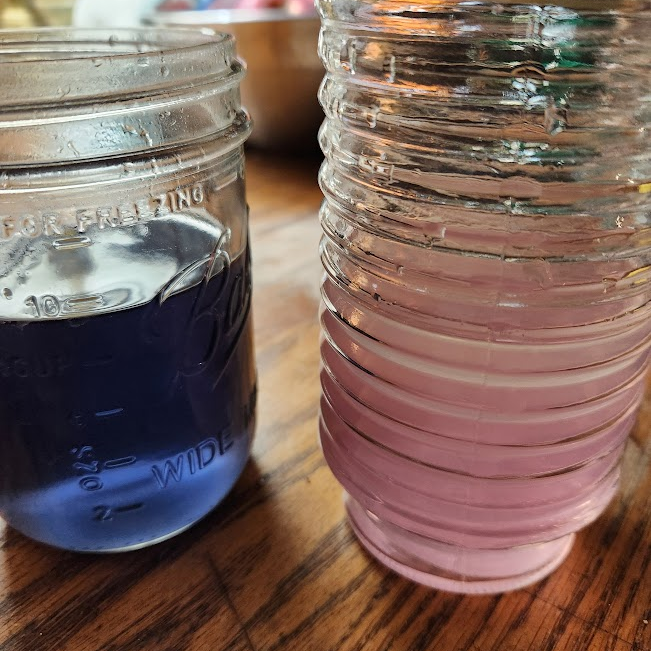
The acidity of the lemon juice turns your wild violet simple syrup pink! I mixed together some more and made an actual batch of lemonade, which was very nice; it had a light and very nondescript floral note to it, but otherwise just tasted like lemons.
I am looking forward to using this for more stuff; last year I used it to make wild violet lemon popsicles, and I used it in tea a lot.
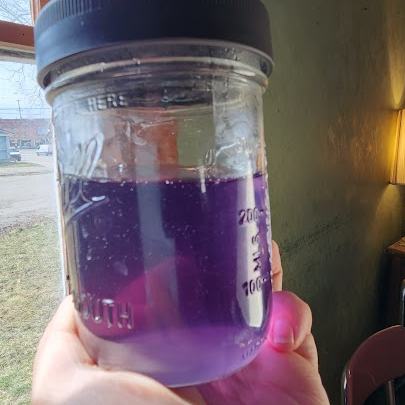
After about a week in the fridge, the syrup has turned to a nice light purple; you could even call it violet…
This is a fun experiment to do with your kids if you are trying to teach them about acids vs. bases and pH levels. The violets contain anthocyanin pigments, which are water soluble and change colour depending on the pH of their environment. If you add acid, like our lemon juice above, you will get a pink colour, but if you add a base like baking soda, it will turn a bluish-green.
The reason our syrup changed to teal before is that the boiling process had caused some of the carbonic acid in the water to decompose into carbon dioxide gas and escape. This meant that the water was now more alkaline than it had been before.
As the syrup sat and cooled, it absorbed carbon dioxide from the air and converted it into carbonic acid, lowering the pH from neutral back down to slightly acidic.
Recommended reading:




 Snug Slug Activities